Beryl's Influences
9 May 2026
Although artist Beryl Cook was self-taught, she didn’t create her paintings in a vacuum. She actively mined newsreels and local papers, was an avid reader who owned many books, captured hundreds of photographs and gained inspiration from a wide variety of materials and artists. There's a section in our ‘Beryl Cook: Pride and Joy’ exhibition which shows her work alongside some of these and demonstrates just how well-informed and considered her practice was. Discover more here!
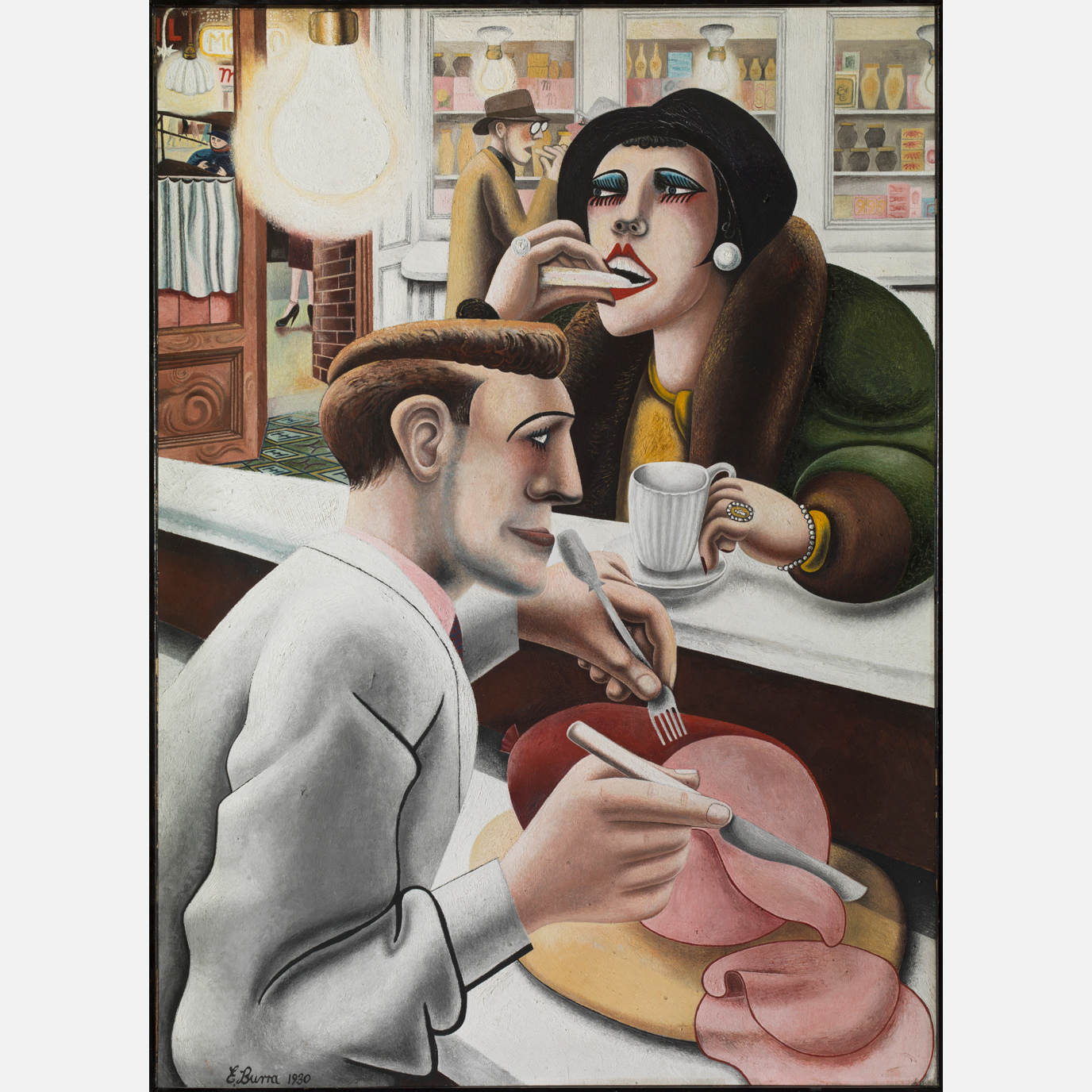
Edward Burra (1905-1976)
The Snack Bar, 1930
Edward Burra was one of Cook’s favourite painters and she once said of his work: ‘that is exactly how I want to paint’. One of the most distinctive British artists of the 1900s, he was known for depicting everyday situations – painting sailors, musicians, café scenes, sex workers and underground nightlife. Sound familiar?! Cook later travelled in his footsteps to the clubs and cafés of Havana, Marseilles, and Harlem. If you look at Snack Bar there are some obvious parallels with Cook’s Elvira’s Café including the observant server behind the counter and the customer caught mid-bite.
Stanley Spencer (1891-1959)
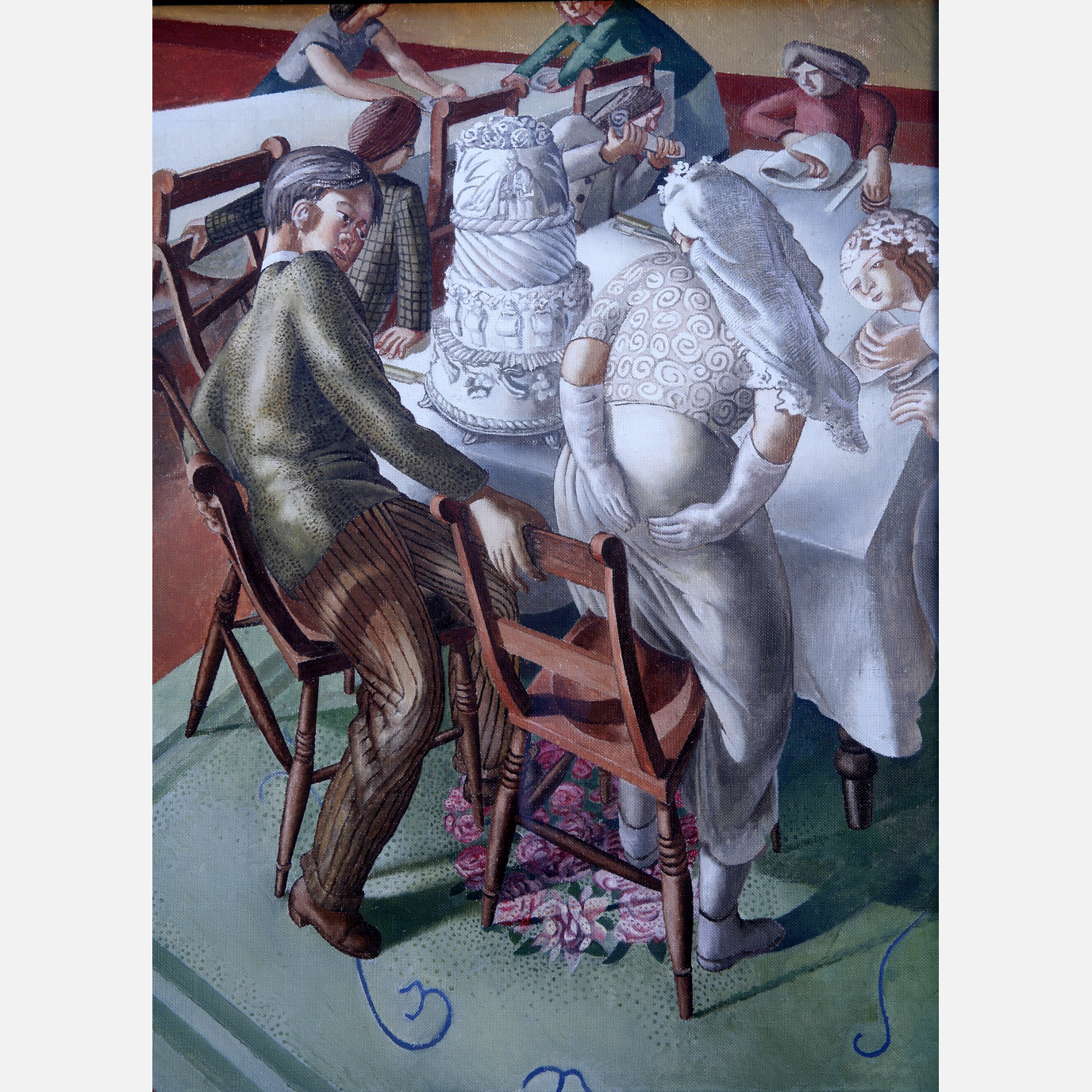
Marriage at Cana, 1953
Cook was also a great admirer of Stanley Spencer and wrote to her friends about visiting exhibitions so she could see his work close up. One of the most important English painters of the 1900s, he is celebrated for his vivid and intimate portrayals of the human experience. This painting is a great example of his work and is set his home village of Cookham, Berkshire. Here, a groom pulls a chair out for his new bride as she prepares to sit down. Around them there are signs of last-minute organisation as the table is laid in a hurry. It’s a moment of gentle awkwardness that shares a similarity with the compassionate humour that Cook herself is so well-known for.
Pieter Brueghel the Younger (1564-1638)
Wedding Dance in Open Air, 1607-1614
Many of Cook’s scenes show people drinking and dancing with swirling compositions and bright colours – not unlike this vibrant work of a high energy village celebration. Artist Pieter Brueghel the Younger was one of the most prolific and successful painters of Europe in the 1600s and Cook had a book about him in her studio library. His crowded and joyful village scenes show everyday life, folk traditions and people living their lives to the full.
Beryl Cook (1926–2008)
Salvador Dali, early 1970s
Voyage to Labrador (after Alfred Wallis), 1981
Portrait of Freda, late 1960s-early 1970s
La Tunique Rose (after Tamara de Lempicka), 1999
These works that Cook for her friends and family are tributes to other famous artists she admired. The first two reference surrealist artist Salvador Dali (1904-1989) and Cornish painter Alfred Wallis (1855-1942) who, like Cook, was self-taught and worked with found materials. The work is signed B. Wallis. Portrait of Freda is an early painting of Cook’s sister in the style of Italian painter and sculptor Amedeo Modigliani (1884-1920), who was known for showing his figures with long faces and necks. Cook also made many replicas of works by Tamara de Lempicka (1894-1980), a Polish painter best-known for her polished portraits of the fashionable women of the roaring 1920s.
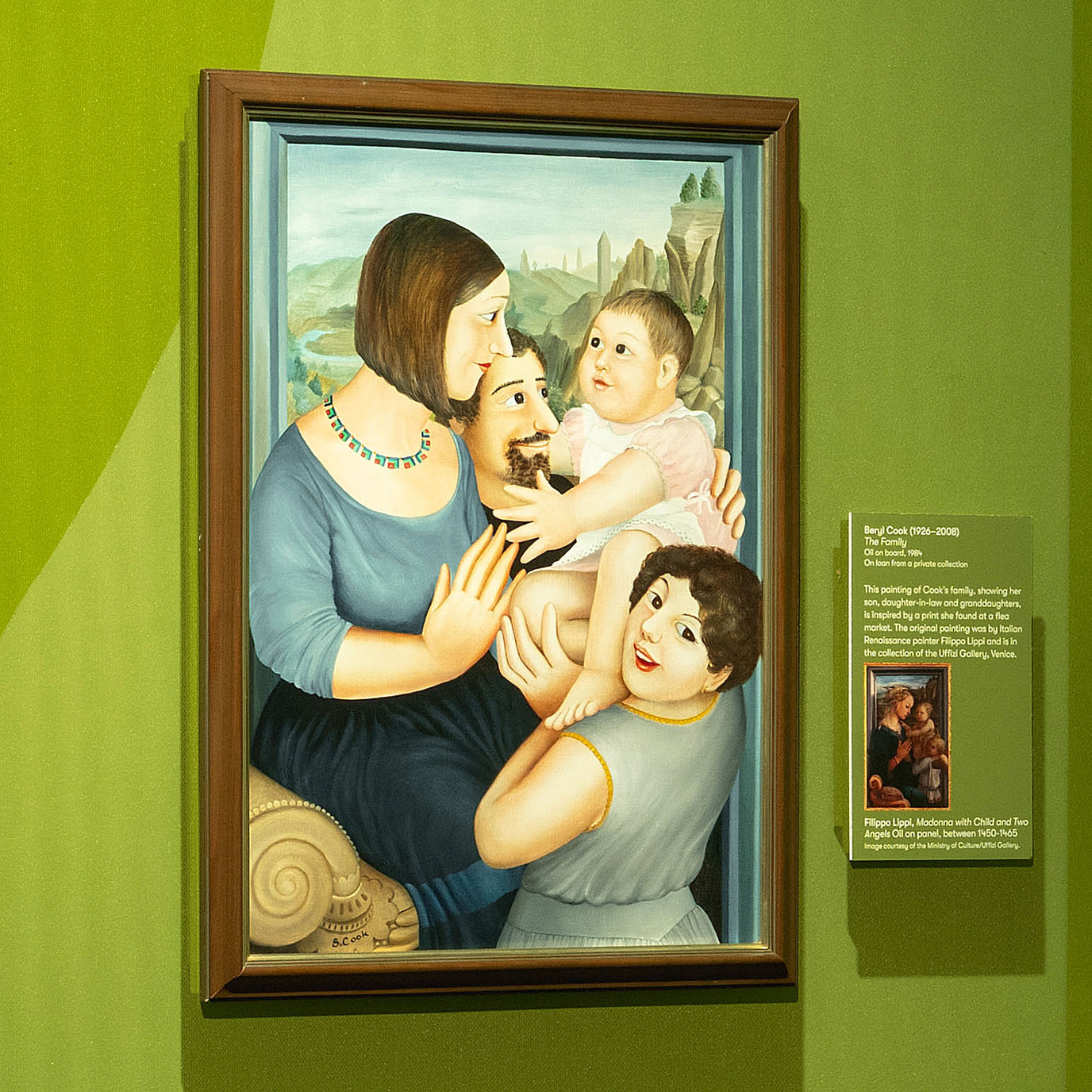
Comedian Victoria Wood once described Cook as ‘Rubens with jokes’ and you can also view a work by Rubens (1577-1640) in this section of the Pride and Joy exhibition. A 1984 painting of Cook’s family, showing her son, daughter-in-law and granddaughters and inspired by the work of Italian Renaissance artist Filippo Lippi (1406-1469) is also on display.
Beryl Cook: Pride and Joy can be seen at The Box until 5pm on Sunday 31 May. Free tickets are available to book. Advance booking is strongly recommended. Exclusive evening access is also available on 15, 21, 22, 28 and 29 May for just £8 per person. Evening slots can be booked in advance here.
Many thanks to Terah Walkup, art curator at The Box Plymouth
Images
The Snack Bar, Edward Burra, 1930 © The estate of Edward Burra, courtesy Lefevre Fine Art, London
Marriage at Cana, Stanley Spencer, 1953 © The estate of Stanley Spencer, courtesy City & County of Swansea: Glynn Vivian Art Gallery Collection
The Wedding Dance, Pieter Brueghel the Younger, 1607-1614, courtesy The Holburne
Beryl Cook: Pride and Joy install images by Dom Moore